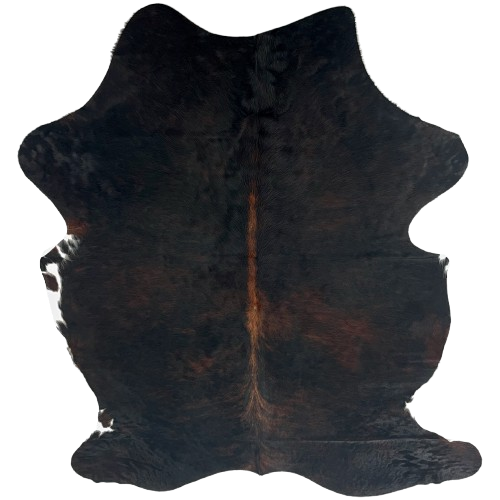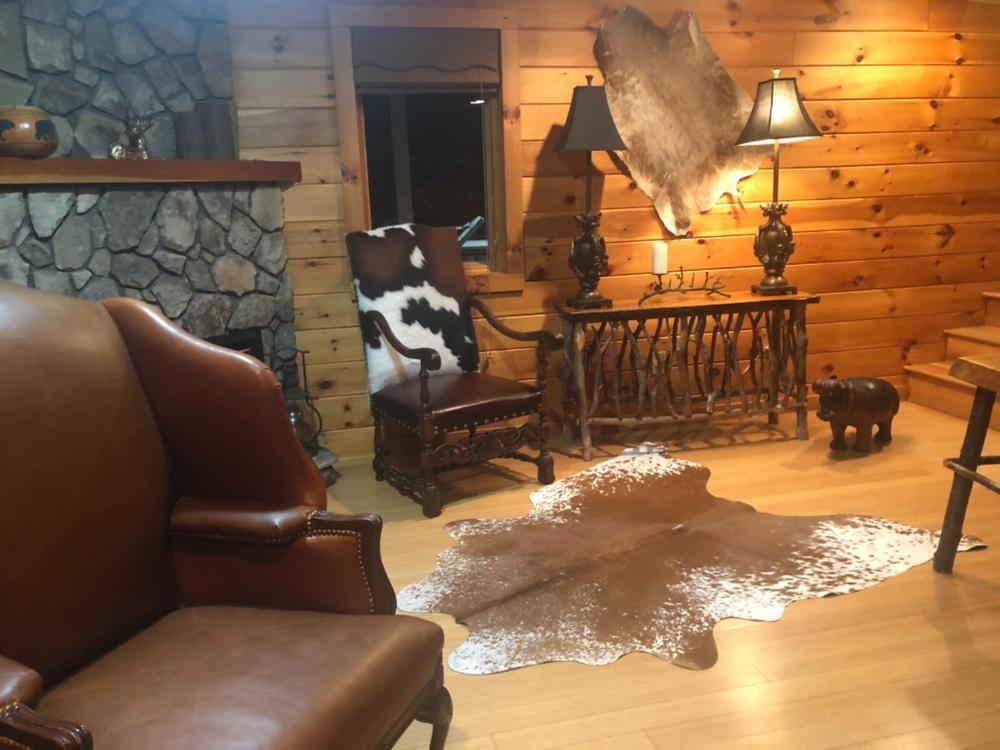
A cowhide on the wall works like a piece of natural art: one of a kind, full of texture, and easy to change later. Here are five ways to hang one, from no-holes-in-the-hide options to the most permanent, plus how to pick the right size and keep it looking good.
Before You Start
- Pick the wall and the size together. Mark the hide's measurements on the wall with painter's tape and step back. Leave some open wall around it so the shape stands out.
- Decide which way it faces. Lay the hide on the floor in front of the wall and try it vertical (neck at the top), horizontal or on a slight angle. Most people center the spine line.
- Let it relax first. If the hide was folded for shipping, lay it flat, hair side up, for a few days. Stubborn creases ease if you press the suede side with a warm iron through a damp towel.
- Get a helper for a full-size hide. Even a medium hide is heavier and floppier than it looks. One person holds, one fastens.
- Check behind the wall for wiring and pipes before you drill or nail.
1. Curtain Rod and Clip Rings (Easiest, No Sewing)
Mount a curtain rod or a wooden dowel on two brackets, then clip the top edge of the hide with curtain clip rings every 6 to 8 inches. It goes up in about 15 minutes, comes down just as fast, and leaves no holes in the hide.
- Use a rod a few inches wider than the hide so the brackets sit outside it.
- Clip into the thicker edge of the hide, not the thin outer fringe.
- Good for: Small and medium hides, renters, anyone who likes to rearrange.
2. Fabric Sleeve and Rod (Cleanest Look)
Hand-stitch a strip of sturdy cotton or linen across the back of the hide near the top to make a sleeve, slide a rod through it and rest the rod on two hooks. Stitch only through the back of the hide so nothing shows on the front.
- Leave 1 to 2 inches of rod showing at each end for the hooks.
- Paint or seal a metal rod first so rust can't mark the hide.
- Good for: Full-size hides and brick or plaster walls where you want only two holes.
3. Mount It on a Board
Cut a thin plywood panel a few inches smaller than the hide all around, fix the hide to it with small staples near the edges (the hair hides them), and hang the board with a French cleat or picture wire. The hide stays flat and the whole piece lifts off the wall in one go, though the staples are permanent.
- Good for: A gallery-style look and moving it between rooms.
4. Heavy-Duty Hook-and-Loop Strips (No Nails)
Sew or glue the soft side of heavy-duty hook-and-loop tape along the back edges of the hide and fix the matching strips to the wall. Put strips along the top edge and a few lower down so the hide doesn't sag.
- Check the weight rating on the package and use more strips than you think you need.
- Adhesive can pull paint when it comes off, so test a small spot first.
- Good for: Small hides, calfskins and goat hides, and rentals.
5. Small Nails or Staples (Most Secure)
Start with one nail at the top center, then work outward along the top, pulling the hide gently flat as you go, and finish the sides and bottom. Thin, small-headed nails or upholstery staples sink into the hair and disappear.
- This method puts small holes in the hide, so choose it only if the hide will stay on the wall.
- Add a nail wherever the hide buckles; remove one if it puckers.
- Good for: Large and extra large hides that need to stay perfectly flat.

Which Size Works on a Wall?
- Mini (about 3′ × 2′) and calfskins and goat hides: above a dresser or desk, in an entryway or a kid's room.
- Small (about 4′ × 3′): the easiest wall size. Fits over a bench, console table or headboard.
- Medium and Large: over a sofa or king bed, or in a stairwell.
- Extra large (7′ and up): a statement piece for a tall, open wall.

Keeping a Hanging Cowhide Looking Good
- Keep it out of long, direct sun, which can fade the hair over time.
- Every month or two, give it a light pass with a vacuum on low or a soft brush, in the direction the hair lies.
- For a mark, blot it with a damp cloth. Don't soak or scrub. Our care guide covers the rest.
Questions
Will hanging a cowhide damage it?
Not with clip rings, a sleeve and rod, or hook-and-loop strips: they leave the front of the hide untouched. Nails and staples, including on a board, leave small holes, so save them for a hide that will stay put.
Can I hang a cowhide in a rental?
Yes. A rod with clip rings needs only two bracket holes, and hook-and-loop strips need none. Test any adhesive on a hidden spot first.
Can I take it down and use it as a rug later?
Yes, as long as you didn't nail or staple it. Lay it flat for a day or two and it's ready to go on the floor.
Not sure which hide will work on your wall? Send a photo of the space to [email protected] and we'll suggest a size and pattern, free. Or browse all cowhide rugs; every listing shows the exact hide you'll receive.