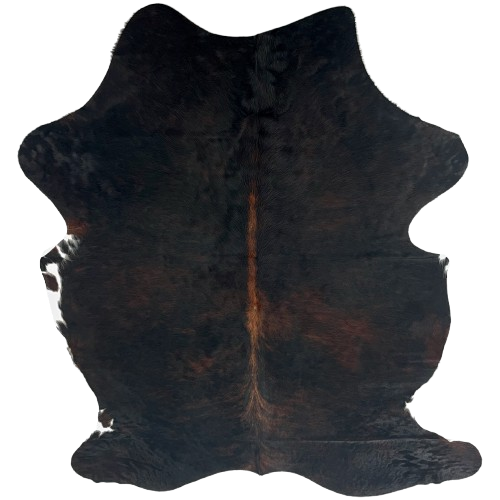
A cowhide rug is one of the easiest ways to add texture and warmth to a room. Its natural shape breaks up the straight lines of furniture and floors, and because every hide is different, no two rooms look the same. Here's how to layer a cowhide, where it works best in each room, and how to choose the size and pattern.
How to Layer a Cowhide Rug
Layering a cowhide over a larger rug is a designer trick that adds depth and makes a big room feel finished. It works best when the two rugs contrast.
- Start with a flat base rug. Jute, sisal, a flat-weave or a low-pile wool rug gives the cowhide a firm surface. Thick shag makes it hard for the hide to lie flat.
- Contrast texture and pattern. A speckled or spotted hide over a plain, neutral rug looks intentional. Over a busy patterned rug, choose a solid or quiet hide, like a grey or neutral cowhide.
- Leave a border of the base rug. Aim for at least 12 to 18 inches of the base rug showing around the hide so both read clearly.
- Angle it. Set the cowhide at a slight angle instead of squaring it up with the base rug. It looks relaxed and lets the shape stand out.
- Layering on wall-to-wall carpet works the same way. A low-pile carpet is fine; place a thin rug pad under the hide if it shifts.

Cowhide Rug Living Room Ideas
- Under the coffee table. The classic spot. Center the hide on the table with the spine running the same way as the sofa, and let the front legs of the sofa and chairs rest on it, or keep the whole hide in front of them.
- Size: for a standard sofa and coffee table, an X-Large hide (about 7′ × 6′) fills the space. In a smaller living room, a Large or Medium hide works.
- In front of the fireplace or beside a reading chair, a hide defines a cozy corner without a full area rug.
- With leather and wood: warm brown cowhides, brindle and tricolor hides pair naturally with leather sofas and wood floors.
- With grey, white or black furniture: black and white and salt and pepper hides keep the palette clean and modern.

Cowhide Rug Bedroom Ideas
- At the foot of the bed, laid across the width of the bed, so it's the first thing your feet touch in the morning. A Large or X-Large hide works for a queen or king.
- Beside the bed, a Small cowhide (about 4′ × 3′) or a calfskin on each side gives a softer, symmetrical look.
- Over the bed, a speckled or brindle hide also works as a throw across the foot of the bed, especially in a rustic or western room.
- In a kids' room or nursery, a Small hide is easy to care for and holds up to play.

Dining Room, Entry and Office
- Dining room: under a round or small table, choose a hide large enough that chairs stay on it when pulled out, usually X-Large or XX-Large. For a long rectangular table, a cowhide works better as an accent near the sideboard than under the table.
- Entry or hallway: a Small or Medium hide makes a strong first impression and handles foot traffic well.
- Home office: under the desk chair or in front of the desk. A short-haired hide lets chair wheels roll more easily than a thick rug.
- On the wall: see how to hang a cowhide on the wall.

Choosing the Right Size
- Small (about 4′ × 3′): bedsides, entries, kids' rooms, desks.
- Medium and Large (about 6′ to 7′ long): smaller living rooms, the foot of a queen bed, reading corners.
- X-Large and XX-Large (about 7′ to 8½′ long): full living room seating areas, the foot of a king bed, under a dining table.
Before you buy, mark the hide's measurements on the floor with painter's tape and live with it for a day. Every listing shows that exact hide's size, measured at its longest and widest points.
Choosing a Pattern
- Speckled (salt and pepper): fine texture that reads as a soft neutral from across the room. The easiest to place.
- Spotted (black and white, brown and white): bold and graphic. Best with simple furniture and a calm floor.
- Brindle: streaks of brown, tan and black. Warm, rich and forgiving with pets.
- Tricolor: brown, white and black in one hide. Ties together wood, leather and white walls.
- Grey and neutrals: quiet and modern, and good for layering over patterned rugs.

Keeping It Looking Good
Rotate the hide every few months so it wears evenly, shake it out or vacuum on low, and blot spills right away. Our guide on how to clean a cowhide rug covers spills, pet accidents and creases.
Questions
Can you put a cowhide rug on top of another rug?
Yes. Layering a cowhide over a flat-weave, jute or low-pile rug is one of the most popular ways to use one. Leave some of the base rug showing around it.
Can you put a cowhide rug on carpet?
Yes, especially on low-pile carpet. If it shifts, add a thin rug pad underneath.
Which way should a cowhide rug face?
Most people run the spine in the same direction as the sofa or the bed, but there's no wrong way. A slight angle often looks more natural than lining it up perfectly.
Not sure which hide fits your room? Send a photo of the space to [email protected] and we'll suggest a size and pattern, free. Or browse all cowhide rugs.